 ™
Our business had a physical footprint. I wanted it to have a machine-readable one.
Why StreetProof exists
I built StreetProof after years of running Garage Door Fix, an Alberta garage door repair and installation company. I wanted visible, real-world business presence to become structured evidence that people, search engines and AI agents could inspect.
The spark
The photo that made it click
How the hell could that photo be worth less to a search engine than a sponsored backlink on some website nobody reads?
The idea clicked when I saw a photo from one of our installations.
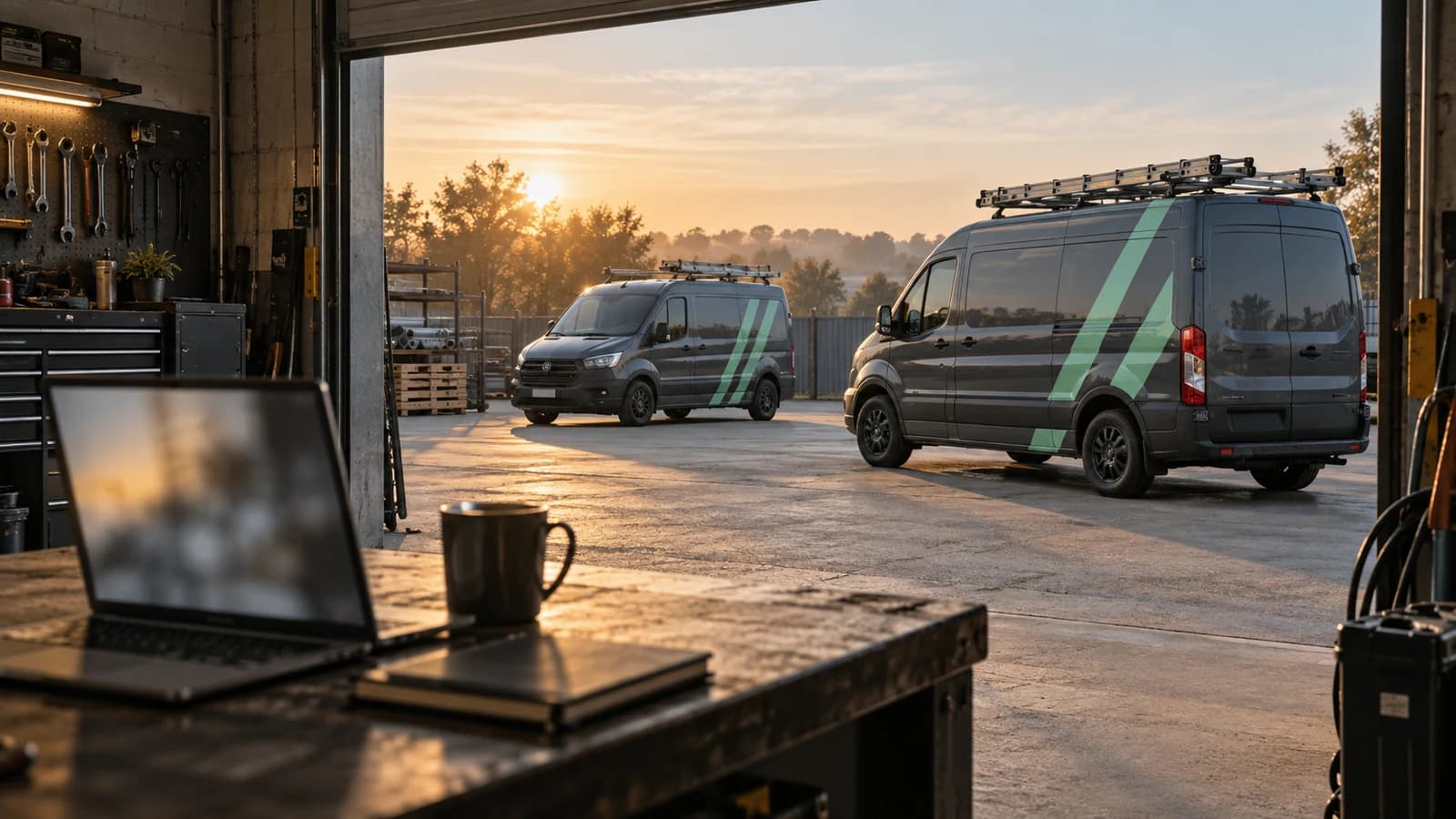
It was a beautiful Ryterna garage door, properly installed, with one of our wrapped Garage Door Fix trucks in the frame. For me, that photo captured our company doing the work. A real truck. A real installation. Real work completed at a real place.
A machine could recognize objects in the image. But the photo didn't come with a structured record explaining what had been observed, where, when, or by whom. The sponsored backlink already came wrapped in context machines could follow.
I wanted to build that missing record.
The education
Learning the online visibility game
That question came after years of learning the online visibility game from scratch. When I registered the domain for Garage Door Fix, I knew nothing about websites or search engine optimization.
I was learning how to run a garage door repair and installation company while figuring out how people would find us. I experimented with the website, studied SEO, and tried to understand why one company appeared above another.
Meanwhile, we built the actual business around published prices, no emergency surcharges, and our own accountable technicians. The company grew, and thousands of customers left five-star reviews.
That reputation took years to earn. Doing the work and making the work visible online were two different jobs.
Backlinks became part of that second job. The theory makes sense: references from other websites can help search engines discover a business and assess its relevance.
Earning them is another matter. A good garage door installation matters to the homeowner paying for it, but it rarely gives a journalist a reason to write about us. I wrote educational content because customers had real questions. I kept improving the site, and Garage Door Fix earned strong search visibility.
StreetProof didn't come from failing at SEO. It came from learning how the system worked, competing successfully, and still seeing something important that the system could not.
The problem
The blind spot between claims and reality
Online, a lead-generation site can look like a local service company. A directory can repeat whatever a business supplied. The same claim can appear on twenty pages without any of those pages adding new information.
That doesn't mean every backlink is bought or every competitor takes shortcuts. It means the internet is excellent at recording what businesses say and what websites say about each other.
Our trucks were already driving through the city. Our branding was visible. Our installers were completing real jobs. None of that activity naturally became a record a machine could evaluate. That was the blind spot I could not shake.
The internet records what businesses say. It is much worse at recording what can be observed in the physical world.
The idea
Turning a sighting into a reference
StreetProof is my attempt to close that gap.
A physical citation is an accepted, privacy-safe record of visible business branding observed at a particular time and place. StreetProof connects the observation to a business identity and makes the record available for people and software to inspect.
Imagine accepted observations of the same business appearing across a city over several months. Together, they create a history with dates, places, observation types, and sources. Repeating the business's own description in twenty directories cannot create the same information.
Search engines and AI systems can choose to consult this evidence alongside other sources. I want StreetProof to earn that role by making its records useful and dependable.
StreetProof accepts observations from Scouts and rights-approved camera sources. Before publication, those inputs go through privacy processing, identity checks, and review. Faces and licence plates are obscured, uncertain matches are held, and repeated images do not automatically become independent evidence.
Calling something proof creates an obligation to make the source, the checks, and the correction process clear. Software and people can make mistakes. Readers need a way to understand and question a record.
The same rules apply to my own business. I founded StreetProof, and Garage Door Fix is indexed in it. That connection should be visible. Claiming a profile or paying for a service cannot buy physical citations or a higher StreetProof rank.
- Storefront
- May support a location claim.
- Branded vehicle
- Documents mobile presence, not an office or service area.
- Billboard
- Documents visibility, not service quality.
- Any observation
- Does not prove popularity, market share or permanence.
The machine layer
AI raised the stakes
AI can help a good business explain itself. It can also produce a mountain of plausible-looking content before lunch.
If an AI agent is researching a company, it should be able to retrieve more than descriptions copied and rewritten across the web. It should be able to follow a source and distinguish what the company says from what was independently observed.
StreetProof is still in its first months and remains in public beta. Its public Machine Pulse reports requests reaching StreetProof records. That is an encouraging early sign of discoverability. Establishing that other systems find the evidence useful is the next step.
An observation cannot tell you a business's current opening hours, service policies, or contact information. Owners should be able to supply and update those details, with the source clearly labelled.
That information belongs beside the observation history, not inside it. Changing an opening time should not change what was observed last month. The owner's facts and the independent record do different jobs. Keeping them distinct makes both more useful.
The vision
The library I want to build
I want StreetProof to become a reference library for the physical business world: somewhere people and AI agents can look up a company and inspect a history of where its branding has been observed.
A useful record should show when an observation happened, what it contained, how it was attributed, and how recent the evidence is. Current business information should sit beside that history with its source clearly identified.
As the network grows, separate accepted observations from eligible sources can make that history more informative. Someone researching a company would have another source to consult, with evidence that adds to what the company says about itself. Where coverage is incomplete, that should remain visible too. A gap in StreetProof is not proof that a business doesn't exist.
StreetProof is early. The work ahead is to grow the collection network and earn trust in the records it produces.
But the reason I started is still that installation photo.
The truck was ours. We had installed the door. The physical presence behind our business should be something people and machines can look up.
See the system today
The first records are already public.
StreetProof is early, and its coverage is incomplete. The public index shows what has been observed, when it was observed and what each record can support.
Explore the StreetProof public index